
Papaxem
Twitter
观点
Why Ethereum voluntarily killed its own revenue (The Amazon Effect in crypto)
Right now, a lot of people are criticizing Ethereum: network fees have dropped significantly, token burns have decreased, and ETH has once again become slightly inflationary (~0.5%).
It looks like the developers shot themselves in the foot. Why would they deliberately kill the network’s revenue?
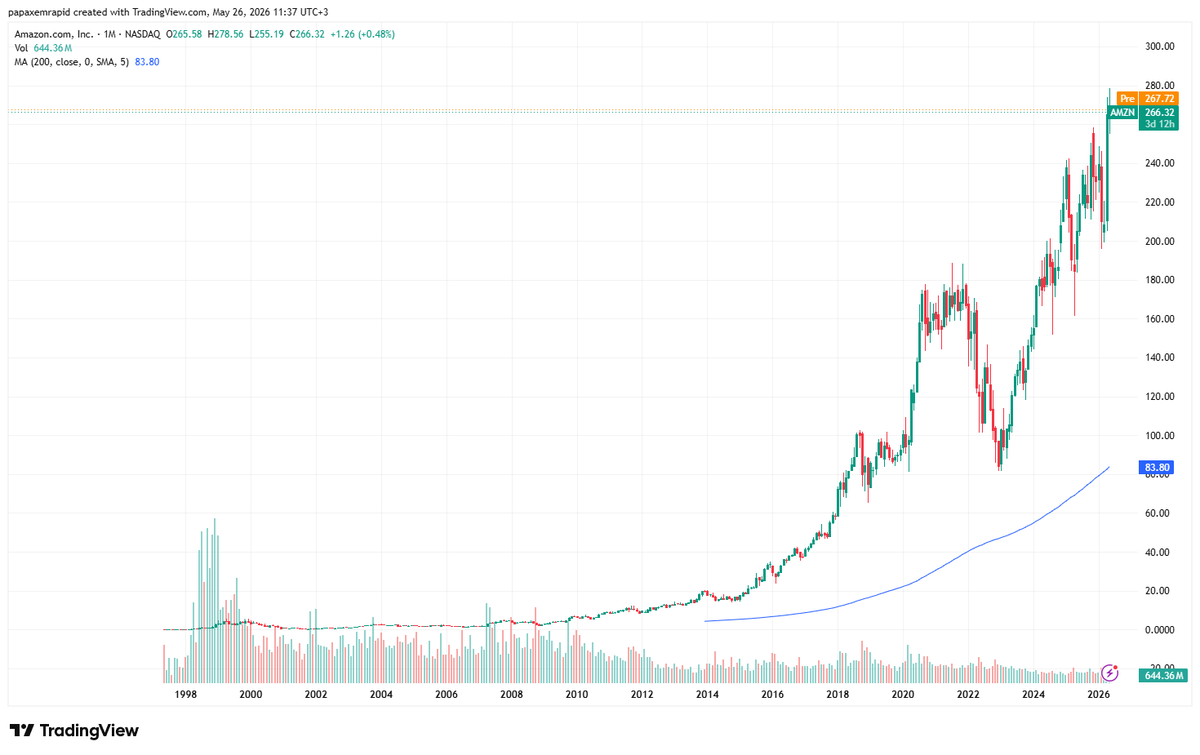
To understand this, let’s look at it through the lens of traditional business strategy. Remember Amazon in its early years? The company operated at zero or even negative margins for years, aggressively cutting prices and destroying its own short-term profits. Why? To capture market share and achieve economies of scale. The same strategy is now being used by the Chinese auto giant BYD.
The law of scale in both Web2 and Web3 is simple: It’s better to earn $0.01 from 1 billion transactions than $50 from 100,000!
If Ethereum had kept fees at $20–$50, it would have turned into an exclusive club for whales. All retail users, game developers, SocialFi projects, and mass-market DeFi would have permanently moved to Solana, BNB Chain, or Aptos. Ethereum would have lost the war for users.
That’s why @VitalikButerin and the @ethereumfndn made a deliberate strategic shift:
1. The base layer is becoming a global settlement layer for large capital, Wall Street, ETFs, and tokenized real-world assets (RWA). Institutions care about maximum security, not cheap fees.
2. Layer 2 networks (Base, Arbitrum, etc.) take on all retail and mass-market applications. Fees there are now extremely low - precisely because L1 made wholesale data posting much cheaper.
The reduction in Ethereum’s fees is an investment in building an infrastructure monopoly. Ethereum sacrificed short-term token deflation in order to maintain its status as the world’s leading blockchain.
In the long term (investment horizon), the bet is that activity on L2s will grow so much that even these tiny wholesale fees will eventually make ETH deflationary again.
The market often thinks in terms of one or two weeks. That’s why we see hype cycles around coins like ZEC or NEAR. But hype always ends, and capital eventually returns to reliable assets - and right now, that’s still only Bitcoin and Ethereum!