
100y
Twitter
观点

How will SK Hynix’s ADR listing impact the tokenized equities landscape?
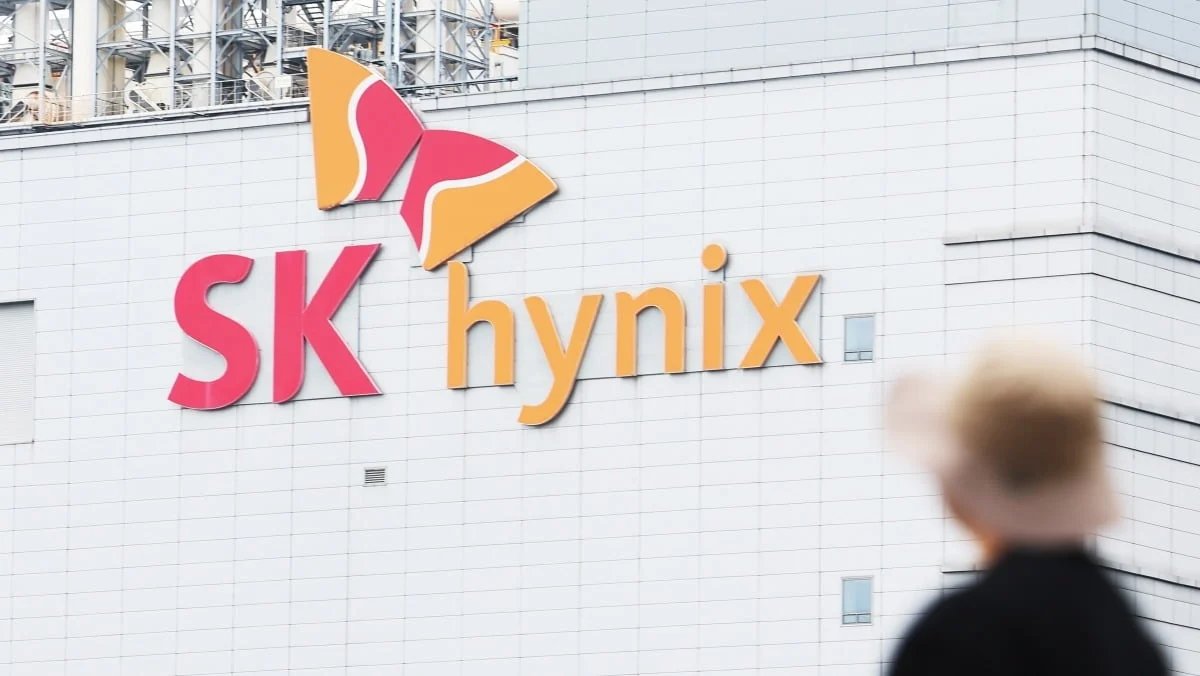
The hottest story in the US stock market right now is SK Hynix’s US ADR listing.
It is set to raise around $26.5B, and demand has been insane, with the book reportedly more than 7x oversubscribed.
But here’s the interesting part.
Recently, Korean equities have been getting a lot more attention, and many platforms have wanted to tokenize Korean stocks.
The problem is that Korean stocks can only be traded in the Korean market, which makes it extremely difficult for platforms to source the underlying shares and tokenize them on a 1:1 collateralized basis.
So until now, the workaround has been platforms like @tradexyz and @QFEX launching perpetual futures markets that track SK Hynix, with investors trading exposure there instead.
Now that SK Hynix is listing in the US via ADR, the setup changes.
Platforms can now source SK Hynix ADR shares through US brokers like @AlpacaHQ.
That means issuer-sponsored tokenization platforms like @Securitize, as well as third party-sponsored tokenization platforms like @RobinhoodApp, @OndoFinance, and @xStocksFi, could potentially acquire SK Hynix ADR shares and start tokenizing them on a 1:1 collateralized basis.
In other words, we could soon see tokenized SK Hynix equities like SKHYx, SKHYon, and similar products.
Korean financial regulators have been watching closely as Korean stocks start trading on offshore perpetual futures platforms.
But if tokenized equities backed by SK Hynix ADRs are launched, and those tokens can freely trade onchain and be used across DeFi, this could become a real headache for regulators.
Especially because in the case of third party-sponsored tokenization, there is not much they can do to stop it.
So the big question is:
- Will tokenized equities based on Korean stocks start coming to market now?
- And how will Korean regulators respond?
Worth watching closely.

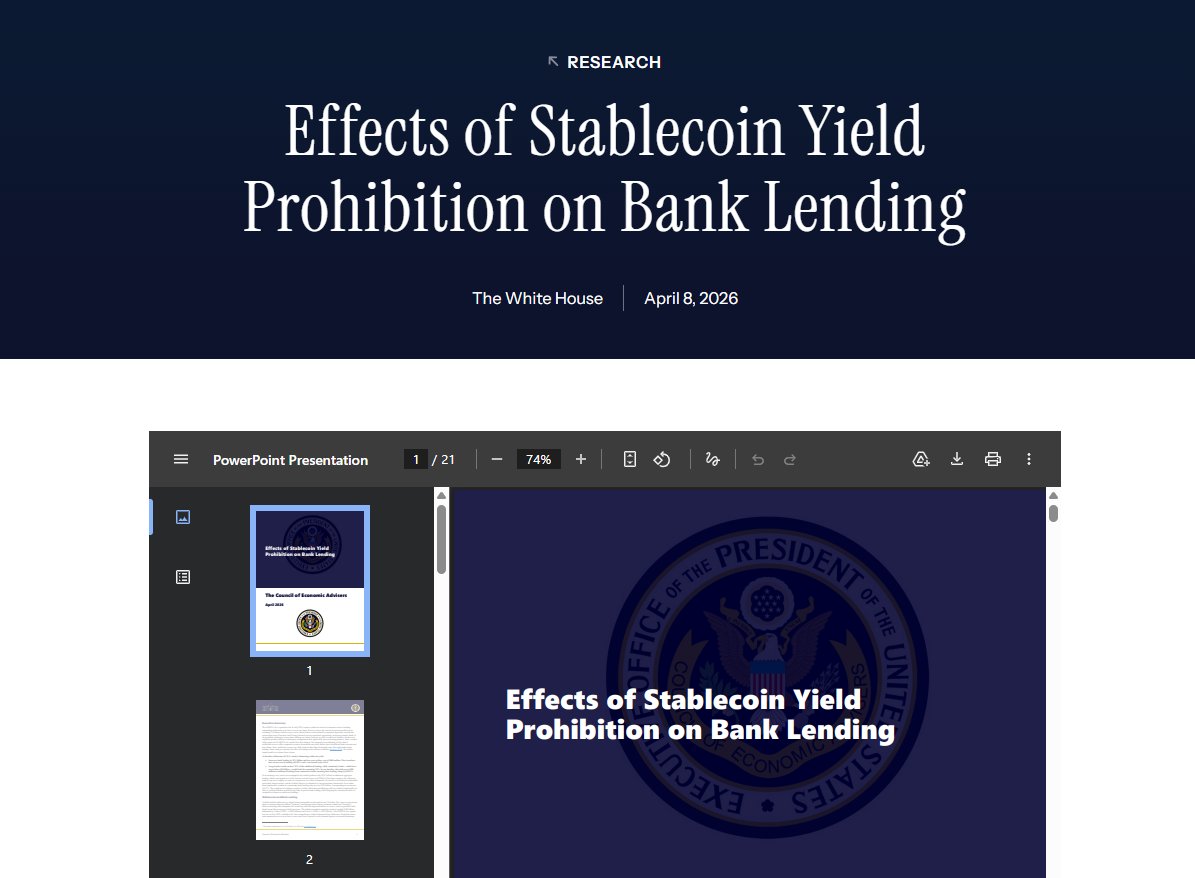
The White House CEA just published a paper arguing that banning stablecoin yield does more harm than good.
What the calculations say:
→ Prohibiting yield increases bank lending by $2.1B. That's 0.02% of total loans. Meanwhile, consumers lose $800M in welfare. Cost-to-benefit ratio: 6.6x.
→ The "trillions in lost lending" claims don't survive scrutiny. Even stacking every worst-case assumption (6x stablecoin market growth, all reserves locked in cash, Fed abandoning its current framework), you get $531B. Not trillions.
→ The "protect community banks" argument falls apart too. $500M in additional lending at baseline. A 0.026% increase.
→ Why so small? 88% of stablecoin reserves sit in Treasuries and recirculate back into the banking system. Only 12% held as cash is actually locked out of lending.
The CEA is siding with the CLARITY Act's direction, where intermediaries like Coinbase can keep passing yield to holders. The White House says the yield ban costs consumers more than it helps banks.
Worth watching how this shapes the debate around yield-bearing stablecoins going forward.
Whether regulators see crypto exchanges as public infrastructure or not,
And regardless of whether Upbit and Bithumb have done a good job or a bad one over the years,
Forcing the owners of large, established private companies to sell down their stakes is basically socialism.
If exchange ownership caps were the goal, that conversation should’ve happened when exchanges were first being built.
Korean regulators ignored or dismissed crypto for years, and now that the industry is big, they’re suddenly approaching it in a socialist way.
How do Circle’s Nanopayments work?
@circle has unveiled a new feature called Nanopayments.
It allows transfers as small as $0.000001 while claiming zero gas fees. How is that possible?
The secret lies in batched settlement.
If every payment created its own onchain transaction, gas costs would quickly add up.
Instead, Nanopayments collects users’ offchain payment signatures through the Circle Gateway. The system calculates net balances and periodically settles accumulated payments in a single batch.
How Nanopayments Work
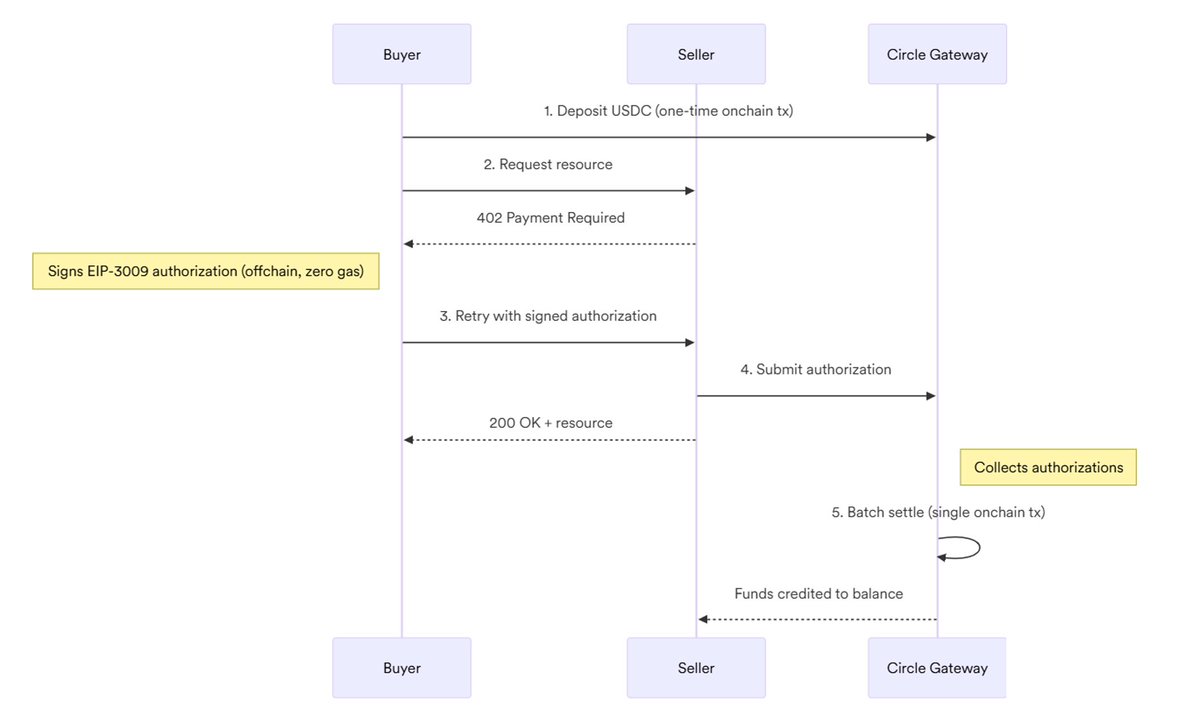
Here is a simplified look at the process:
1. Deposit: The buyer sends USDC from their wallet to the Circle Gateway Wallet. This is an onchain transaction and gas is paid only once at the initial deposit.
2. Request and negotiate: The buyer requests a paid resource from the seller. The seller can respond through the x402 protocol.
3. Sign authorization: The buyer signs an EIP-3009 message. This is an offchain signature that authorizes payment to the seller and requires no gas.
4. Settle and serve: Circle Gateway verifies the signature and checks the buyer’s balance. The corresponding amount is locked. The seller immediately delivers the paid resource to the buyer.
5. Batch settlement: The Gateway periodically aggregates pending offchain signatures, calculates net balances, and settles them onchain in a single transaction.
In other words, thousands of offchain payment transactions are consolidated into one onchain transaction. That is why the effective gas cost approaches zero.
Security Model
One point worth highlighting is that the offchain payment authorization process might appear custodial at first glance. However, Circle Gateway is designed to be non custodial.
Circle Gateway runs inside an AWS Nitro Enclave TEE. Within this environment, the system verifies EIP-3009 signatures, computes batch settlement results, and signs the final batch transactions. The TEE signing keys are securely protected using AWS KMS. Even Circle employees cannot access the enclave or the keys.
Thoughts
There have been many attempts to implement micropayments. Most approaches simply relied on sending transactions on networks with extremely low gas fees.
Nanopayments takes a different path. By aggregating offchain transactions and processing them in batches, it dramatically reduces gas costs. (For reference, the USDT chain @Stable has implemented a similar concept at the network level called the USDT Transfer Aggregator.)
This approach could become especially meaningful in the future. As the agentic economy evolves, AI agents may increasingly stream payments in real time. Nanopayments creates the infrastructure that makes that model viable.